
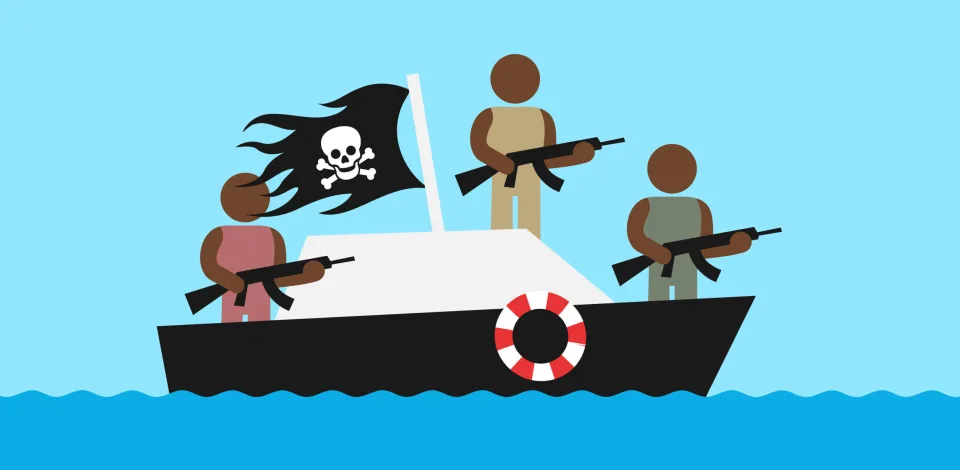
An Eritrea-flagged oil products tanker has reportedly been hijacked while sailing westbound through the Gulf of Aden, raising fresh concerns over piracy risks in waters off Somalia.
The incident was reported on 20 August approximately 136 nautical miles east of Al Mukalla, Yemen. The tanker is understood to have transmitted a distress call on VHF Channel 16 after an unauthorised vessel approached.
Context: Tankers Intelligence File · Gulf of Aden
According to information cited from maritime security provider Diaplous, six armed individuals subsequently boarded the tanker and are believed to have taken control. The vessel was reportedly being redirected towards Somalia.
Operational context
No confirmed information was available regarding the safety, location or condition of the crew. The identities and intentions of those who boarded the vessel had also not been established, while details of the situation onboard remained limited.
The event follows another reported boarding in the region on 17 August 2026. In that case, eight armed and unauthorised individuals allegedly boarded and took control of a cargo vessel around four nautical miles south of Mareeyo, Somalia.
The two reports add to indications of renewed piracy activity off Somalia following a period of relative decline. Thirteen piracy-related incidents were reportedly recorded in the region during the first seven months of 2026. While that figure remains well below the peak of the Somali piracy crisis between 2009 and 2011, when annual attack numbers exceeded 200, the latest events indicate a continuing security threat to commercial shipping.
The Gulf of Aden is a major maritime corridor linking the Indian Ocean with the Red Sea and the Suez Canal. The reported resurgence, together with wider regional security risks, is increasing pressure on shipowners, operators and crews to maintain robust protective measures, particularly aboard slow-moving or otherwise vulnerable vessels.
What it means for maritime operators
Diaplous advised ships operating in the area to maintain the maximum safe speed, avoid unnecessary stopping or drifting and apply BMP MS 2025 measures. Recommended precautions include enhanced lookouts, continuous 360-degree monitoring, secured access points and physical barriers.
Operators were also advised to verify the readiness of citadels, alarms, propulsion, steering, communications, emergency power and internal response procedures. Non-essential personnel should be kept away from exposed decks, while crews should be briefed on suspicious approaches, attempted boardings and pirate-boarding procedures.
Suspicious craft, unusual VHF traffic and security incidents should be reported through established maritime security channels and to the company security officer. Ships should maintain a listening watch on VHF Channel 16, monitor relevant security broadcasts and keep satellite communications available.
Diaplous further recommended treating unidentified small craft that approach persistently or at speed as potential piracy threats. Vessels nearing the reported position should maintain safe separation, avoid unnecessary deviations towards the Somali coast and follow instructions from naval forces or maritime security authorities.