
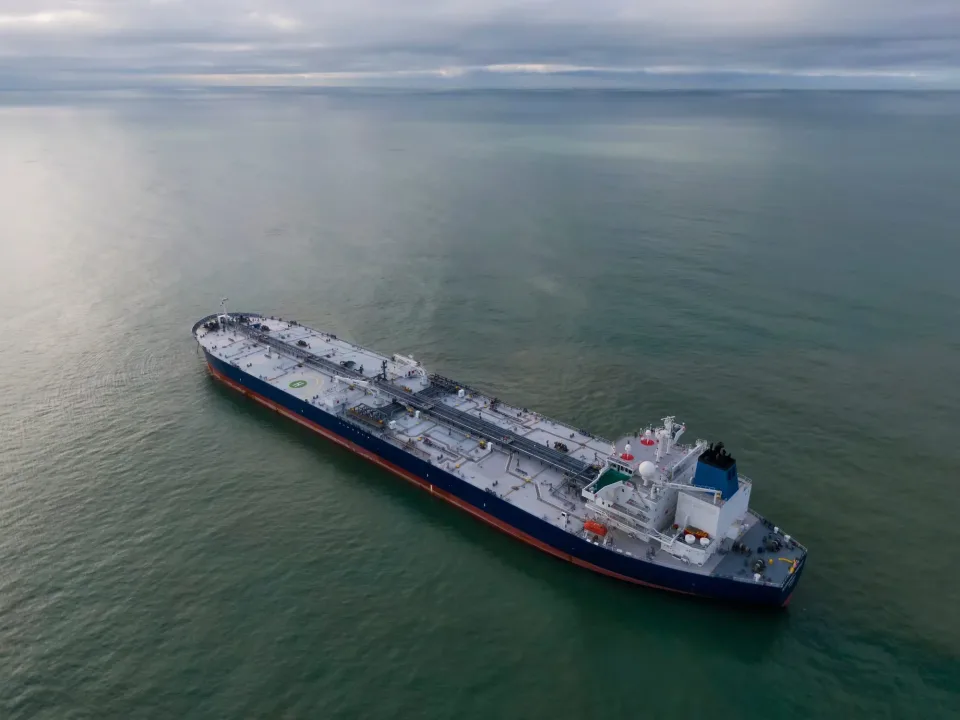
Supertanker earnings on the Middle East-to-China crude route have climbed to nearly $510,000 per day as Persian Gulf exporters compete for vessels capable of navigating the Strait of Hormuz amid an uncertain security environment.
Baltic Exchange data showed assessed earnings on the route reaching their highest level since late June on Monday. The earlier peak coincided with Iran resuming attacks on ships transiting the strait.
Context: Strait of Hormuz Intelligence File · Strait of Hormuz shipping guide · Strait of Hormuz · Persian Gulf
Shipping fixture reports and shipbrokers separately indicated that the very large crude carrier Mongolia Prosperity is due to load crude at an unnamed Persian Gulf port for delivery to East Asia. The voyage was reportedly agreed at $31 million, equivalent to 570 Worldscale points.
Operational context
Baltic Exchange benchmark assessments generally reflect market transactions and pricing developments. However, it was unclear whether reports concerning the Mongolia Prosperity fixture affected the latest route assessment.
The rise in earnings comes as Persian Gulf exporters seek more ships to fulfil crude supply commitments to Asian customers. Saudi Arabia is offering prompt cargoes from within the region, while Iraq is using the United Arab Emirates’ national exporter to transport barrels. Abu Dhabi National Oil Co. has established a system for moving crude through Hormuz, at times working with South Korean shipowner Sinokor Group.
Tanker availability remains constrained by the risks associated with the waterway. A 60-day ceasefire between Iran and the US ended on Monday, with no known plans to resolve the two sides’ competing assertions over maritime traffic through the strait. As a result, cargoes loading inside the Persian Gulf depend heavily on shipowners willing to accept the risks or operators with previous experience of hazardous transits.
Shipbrokers said several supertankers had been privately booked in recent days, with vessels removed from lists of available tonnage without public confirmation of fixtures. Many voyages originating within the Gulf are handled by exporter-controlled ships or a limited group of tanker owners, including Sinokor-linked vessels. This concentration gives available owners stronger leverage when negotiating prompt charter rates.
Limited public information about Middle East-to-China fixtures is also making it more difficult to assess the main supertanker earnings benchmark.
Mongolia Prosperity, operated by Sinokor, was reportedly booked by the shipping arm of a Chinese refiner to load crude within the Persian Gulf on August 21. According to the fixture information, the charterer is expected to cover the additional war-risk insurance premium, currently assessed at a high single-digit percentage of the vessel’s hull value. Sinokor did not immediately respond to a request for comment.