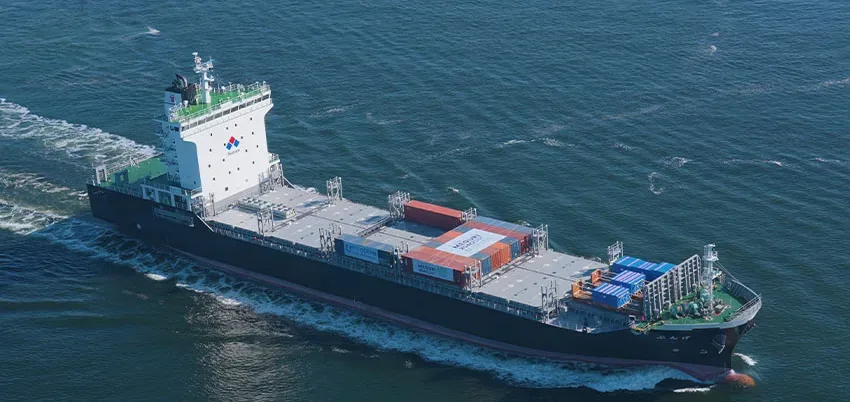
The International Maritime Organization has adopted its first International Code of Safety for Maritime Autonomous Surface Ships, establishing a global framework for the design and operation of commercial vessels using autonomous or remote-control technologies.
Adopted by the Maritime Safety Committee at its 111th session in London, held from 13 to 22 May 2026, the MASS Code is intended to support the safe integration of AI-enabled and remotely operated ships into international shipping.
Context: IMO & Regulation Intelligence File · IMO Net-Zero Framework explained · International Maritime Organization (IMO) · SOLAS
The goal-based framework requires autonomous and remotely controlled vessels to provide levels of safety, security and environmental protection comparable with conventional ships. Such vessels must also comply with the International Convention for the Safety of Life at Sea and other applicable mandatory IMO instruments.
Operational context
The Code applies to cargo ships covered by SOLAS Chapter I and will take effect on 1 July 2026. It will initially be non-mandatory, allowing IMO Member States and the maritime industry to gain practical experience with its provisions before work advances towards binding rules under SOLAS.
Under the IMO’s definition, a ship is autonomous when its onboard technology is designed and verified to control actions without human intervention. Although fully crewless and remotely operated vessels remain limited in number, trials are taking place in several parts of the world.
The MASS Code addresses the design, approval and operation of these ships, covering navigation, connectivity, remote operations, fire safety, and search and rescue. It also places emphasis on risk assessment, resilient system design, cybersecurity and the integration of Remote Operations Centres.
Human oversight remains a central element of the framework. The master will retain overall responsibility for the vessel at all times, including when the master is not physically on board.
What it means for maritime operators
IMO Secretary-General Arsenio Dominguez described the adoption as a major step in the regulation of emerging maritime technologies, combining support for innovation with continued attention to safety, accountability and the human element.
The Code supplements existing IMO instruments and takes account of international law, including the United Nations Convention on the Law of the Sea. Its adoption follows nearly a decade of technical discussions, legal work and operational trials focused on enabling autonomous and conventional ships to operate safely alongside one another.
The IMO has also set out a roadmap towards mandatory requirements. At MSC 112 in December 2026, the organization plans to re-establish its MASS Working Group to develop a framework for an Experience-Building Phase. Development of a mandatory code is scheduled for 2028, drawing on the non-mandatory framework, operational experience and reviews by relevant sub-committees.
The first mandatory MASS Code is expected to be adopted by 1 July 2030 and to enter into force on 1 January 2032, subject to the planned SOLAS amendment process.