
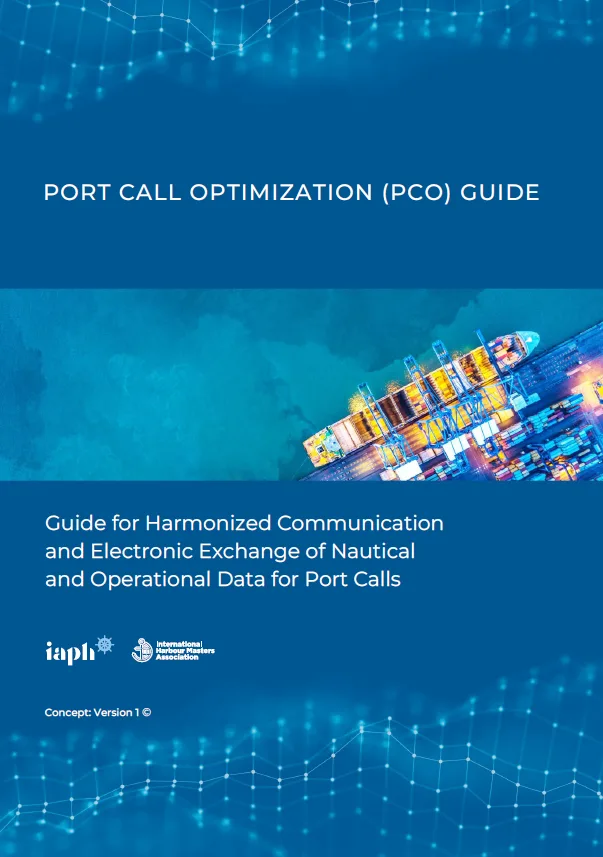
The International Association of Ports and Harbors (IAPH) and the International Harbour Masters’ Association (IHMA) have launched a new Port Call Optimization Guide during the 50th session of the IMO Facilitation Committee (FAL 50).
Developed through collaboration among maritime stakeholders, the guide is intended to improve the safety, efficiency and sustainability of port calls. It focuses on the harmonized electronic exchange of key nautical and operational information, aiming to give ships, ports and related service providers greater predictability when planning and executing vessel arrivals and departures.
Context: IMO & Regulation Intelligence File · IMO Net-Zero Framework explained · International Maritime Organization (IMO)
The data sets included in the guide have already been tested through practical port-to-port trials. According to the organizations involved, the trials demonstrated that the information covered by the guide is relevant and applicable in operational settings.
Operational context
The publication is designed for a broad group of port-call participants, including harbour masters, port authorities, terminal operators, nautical service providers, ship operators, policymakers and technology or solution providers. Wider use of common data sets is expected to strengthen coordination between these parties and reduce inefficiencies caused by incomplete, delayed or inconsistent information.
The guide builds on previous work by the IMO GreenVoyage2050 Low Carbon Global Industry Alliance, including its Just-In-Time Arrival Guide. That earlier initiative established a basis for closer coordination between ships and ports, with the objective of limiting avoidable waiting periods and the associated emissions.
Ben van Scherpenzeel of the Port of Rotterdam, a member of the Low Carbon GIA, described the guide’s launch as a significant milestone for the industry. He said improved data sharing and ship-port coordination are necessary to make Just-In-Time operations possible and deliver both operational and environmental gains. He also stressed that the next priority is broader adoption and practical implementation across the maritime sector.
Just-In-Time arrival depends on ships receiving reliable information that allows them to adjust their sailing speed and reach a port when the required berth and services are available, rather than arriving early and waiting. The new port call optimization framework is intended to support this process by improving the consistency and flow of operational data.
The Low Carbon GIA said it will continue supporting progress on Just-In-Time implementation, with particular attention to developing countries. Its work will seek to turn the Just-In-Time and Port Call Optimization guides into practical measures that can improve port-call performance and reduce emissions.
The alliance is a public-private partnership bringing together maritime industry participants to support lower greenhouse gas emissions from shipping through collaboration, pilot projects, practical guidance, energy-efficiency measures and low- and zero-carbon technologies.